Materials & Tools
The Best Paper for Pencil Drawing and Sketching
Not all paper is equal for pencil work. Learn what weight, texture, and surface type to look for so your graphite glides exactly how you want it.
The paper you draw on changes everything about how graphite behaves. Too smooth and pencil marks skate across the surface; too rough and fine detail becomes impossible. Getting this right is far more important than buying expensive pencils.
At a Glance
- Paper weight (gsm or lb) tells you how thick and durable a sheet is; graphite drawing needs at least 90 gsm, ideally 100 to 160 gsm.
- Tooth (surface texture) matters more than weight for how a pencil actually feels: smooth for detail, medium for shading, rough is a poor match for graphite.
- "Sketch paper," "drawing paper," and "bristol board" are a rough ladder of weight and durability, not strict categories.
- A medium-tooth 100 to 120 gsm sketchbook is the right default for a beginner; save bristol board for finished pieces.
- Toned paper helps you learn value faster by giving you a built-in midtone, but it is a supplement, not a replacement, for practicing on white paper.
- Never use true watercolor paper for graphite; the heavy grain fights smooth shading.
What Paper Weight Means (and Why It Matters)
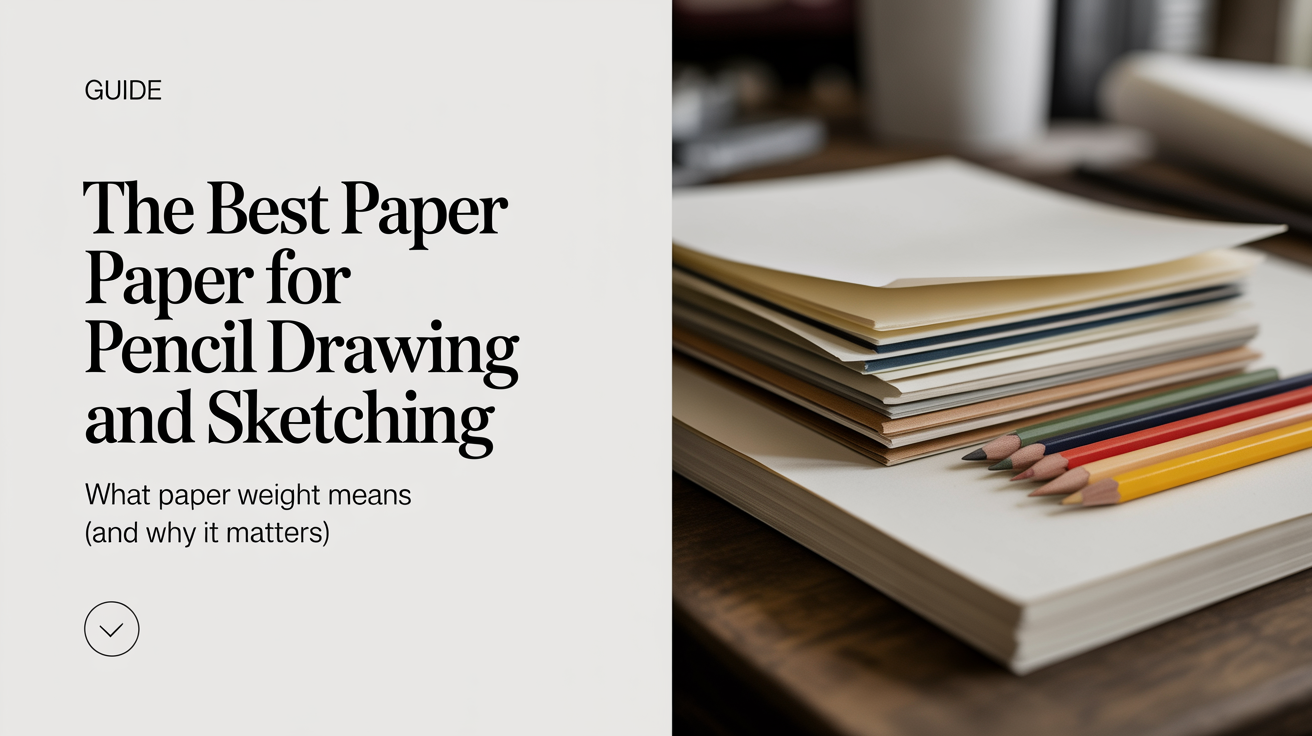
Paper weight is measured in grams per square meter (gsm) or pounds (lb). The higher the number, the thicker and heavier the sheet. In most of the world weight is expressed as gsm, a straightforward area-based measurement; in the United States it is traditionally based on the weight of a 500-sheet ream at a category-specific base size, which is why American "lb" numbers look inconsistent across paper types compared to the simpler gsm system. For pencil drawing, weight affects two things: how much the paper buckles under erasing pressure, and how durable the surface feels over a long session.
Printer paper typically runs around 80 gsm (20 lb). It works for quick idea sketches, but it tears easily under a kneaded eraser and has almost no tooth (the microscopic texture that catches graphite particles). You will fill the surface fast and struggle to build layers.
For serious pencil work, aim for 90–120 gsm (60–80 lb) at minimum for sketchbooks, and 160–200 gsm (90–110 lb) for standalone drawing sheets. Heavy bristol board can reach 270 gsm and handles aggressive layering, blending, and repeated erasure without complaint.
If you are still buying your first set of drawing supplies, the beginner supply guide covers where paper fits into an overall budget.
Tooth and Texture: Smooth vs. Vellum vs. Rough
"Tooth" refers to the texture of the paper surface. More tooth means more grip for graphite; less tooth means a smoother glide. Neither is better in absolute terms. The right choice depends on what you are drawing.
Smooth (hot-press): Very little texture. Graphite sits on top and looks clean and precise. Good for technical line work, architectural sketching, and fine detail like hair or fabric folds. Shading with soft pencils can look streaky because there is not much surface to grab.
Vellum (cold-press or medium tooth): The most versatile surface. A gentle, consistent grain catches graphite evenly, which lets you build gradual tonal ranges without fighting the paper. Most sketchbooks marketed as "drawing paper" fall here. Beginners generally do best on a medium-tooth surface.
Rough: Heavy, pronounced grain. Mostly used for watercolor and charcoal rather than graphite. Pencil marks on rough paper look speckled and gritty, which can be a stylistic choice but rarely what a beginner wants for controlled shading.
Understanding pencil grades (H, HB, B) matters here too, because softer pencils (B grades) respond more dramatically to texture differences than hard pencils do. A 6B on rough paper will look almost twice as coarse as the same pencil on vellum, while a 2H barely changes between the two.
Sketch Paper vs. Drawing Paper vs. Bristol
The terms "sketch paper" and "drawing paper" are used inconsistently by manufacturers, but there is a general pattern worth knowing.
Sketch paper tends to be lighter (70–90 gsm), meant for quick studies and throwaway marks. It erases adequately but is not built for finished work. Sketchbooks with 80 gsm pages are good for practice, not portfolio pieces.
Drawing paper is heavier (100–160 gsm), with more consistent tooth. It handles layering, blending, and careful erasing. This is the paper most people mean when they say they want "good paper for pencil drawing."
Bristol board is a thick, sturdy cardstock, typically 220 to 270 gsm in the plate (smooth) or vellum finish, built by laminating multiple plies of paper together rather than made as a single heavy sheet. It is the go-to for professional graphite work because it survives heavy blending, lifting with erasers, and reworking without tearing or warping. The plate-finish variety is popular with illustrators who want crisp lines; vellum bristol suits realistic shading.
| Paper Type | Typical Weight | Tooth | Best For |
|---|---|---|---|
| Printer / copy paper | 75–90 gsm | Very smooth | Quick notes, printing references |
| Sketch paper | 70–90 gsm | Light | Daily practice, rough studies |
| Drawing paper | 100–160 gsm | Medium (vellum) | Studies, finished pencil work |
| Hot-press bristol | 220–270 gsm | Smooth (plate) | Detailed line work, illustration |
| Vellum bristol | 220–270 gsm | Medium | Realism, layered graphite shading |
| Toned paper | 90–120 gsm | Medium | Highlight-and-shadow studies |
A Worked Comparison: Same Drawing, Three Papers
Picture shading the same simple sphere on three different sheets with a 4B pencil, applying identical pressure each time.
- 80 gsm printer paper: The pencil skates with almost no resistance. Two passes and the tooth is saturated. A kneaded eraser lift shows a faint ghost of the original mark and the paper starts to pill (roll up in little balls) on the third correction.
- 120 gsm vellum drawing paper: The same two passes produce a noticeably richer, more even gray. Erasing lifts nearly clean, and you can layer three or four more passes before the surface stops taking new graphite.
- 250 gsm vellum bristol: The graphite sits in the tooth with room to spare. You can rework the same area five or six times, blend it with a stump, and still lift most of it back to near-white with a vinyl eraser. Nothing buckles.
The pencil never changed. The paper decided how forgiving the whole process was.
When Toned Paper Helps
Toned paper (tan, grey, or light blue) lets you work from a mid-value rather than white, which makes it easier to judge the full tonal range of a drawing. Instead of shading down from white, you shade dark areas with pencil and add highlights with a white pencil or chalk on top.
For beginners, toned paper is genuinely useful for understanding value (lightness and darkness) because the paper itself acts as a built-in middle tone. It is not a substitute for understanding graphite on white paper, but it can clarify how shadows and highlights relate to each other faster than a blank white sheet does.
If you want to compare graphite to other dry media on toned paper, the graphite vs. charcoal comparison covers how each handles highlights and layering on toned surfaces.
A Practical Beginner Recommendation
Start with a medium-weight sketchbook (100–120 gsm) in a vellum or "drawing" finish. Brands are secondary to the specs. Look for these numbers on the cover; most decent art-supply brands print weight on the packaging.
For a loose sheet option without committing to an expensive pad, pick up a small stack of 110 gsm multi-media paper from any art supply or big-box store. It takes graphite cleanly, erases without smearing too badly, and costs almost nothing per sheet.
Once you are comfortable with basic shading and want to do finished work, step up to vellum bristol (220 gsm or heavier). The surface improvement is immediately noticeable. Save hot-press bristol for line-focused work or cross-hatching rather than blended shading.
Avoid paper marketed as "watercolor paper" for graphite only: the heavy rough grain will frustrate anyone trying to get smooth tonal transitions with a pencil.
Frequently Asked Questions
Can I use regular printer paper to learn drawing? Yes, for the very early stages. Printer paper (80 gsm, very smooth) is fine for gesture practice or copying shapes, but it fills quickly and tears easily under erasure. Switching to even a basic 100 gsm sketchbook will noticeably improve the experience.
What is the difference between sketch paper and drawing paper? Sketch paper is lighter and cheaper, suited for rough work and frequent mistakes. Drawing paper is heavier, has more consistent tooth, and holds up to erasing and layering. The two terms overlap, so check the gsm rather than relying on the label.
Is expensive paper worth it for a beginner? Not at first. A mid-range 100–120 gsm sketchbook is enough to learn on. Save the premium bristol or cotton-rag paper for pieces you intend to keep. Learning on cheap paper just means faster, guiltier practice.
How does paper texture affect pencil shading? Rougher paper shows the grain as small white flecks in your shading, which can look textured or uneven. Smooth paper lets graphite sit flat for clean gradients but can look streaky with soft pencils. Medium-tooth vellum paper gives beginners the most control over smooth, even shading.
Does paper color affect the final drawing? White paper is the default and shows pencil values accurately. Toned (cream, grey, or tan) paper shifts the lightest value in the drawing, so you need a white medium to add highlights. For standard graphite work, white paper is almost always the better starting point.
Does the weight number on a pad ever lie about how the paper will feel? Somewhat. Two 120 gsm papers from different mills can feel different because weight only measures mass per area, not tooth or sizing (the coating that controls how much the surface absorbs). If you can, feel a sample page before buying a full pad; a quick pencil scribble on a store display tells you more than the number on the cover.