Materials & Tools
Graphite vs Charcoal: Which Should a Beginner Use?
Graphite vs charcoal: learn the real differences in handling, smudging, and detail so you can pick the right drawing medium from day one.
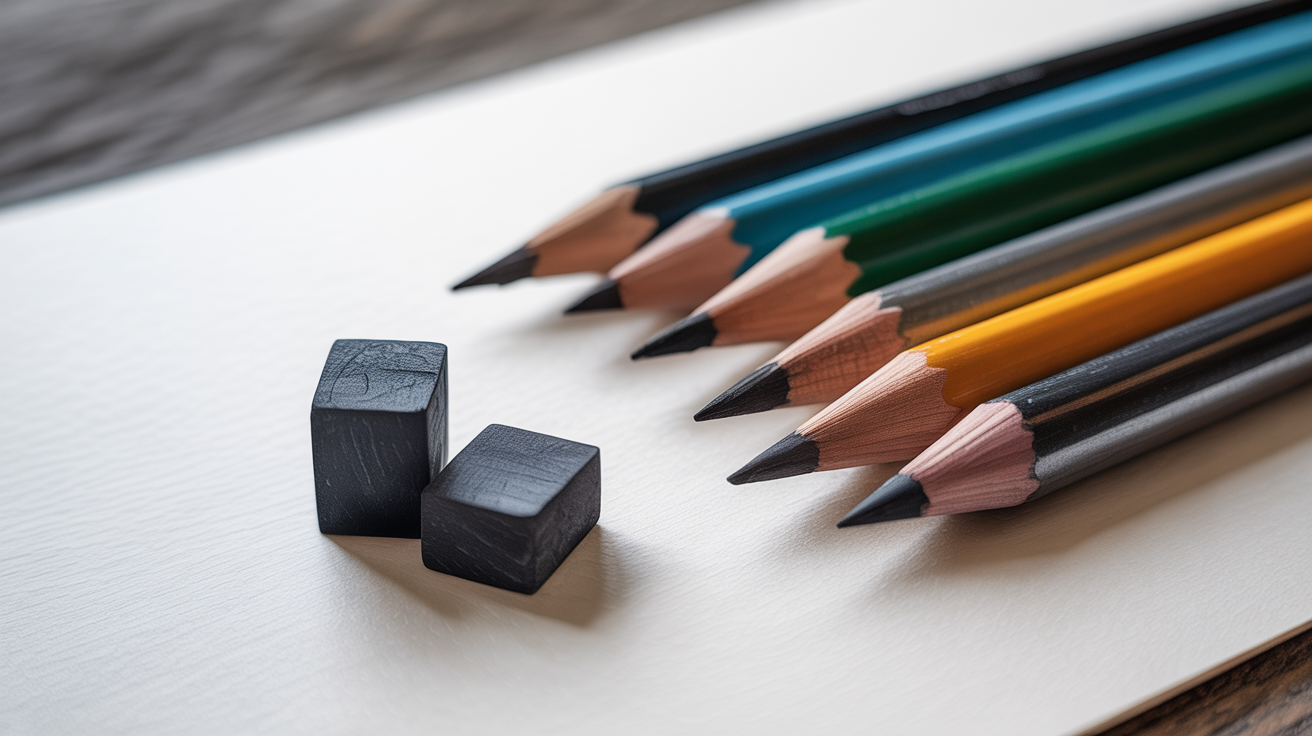
Graphite and charcoal are both carbon-based drawing materials, and from a distance they can look almost identical on the page. Up close, they behave very differently, and choosing the wrong one can make drawing feel harder than it needs to be. For most beginners, graphite is the more forgiving starting point, though charcoal has genuine advantages that are worth understanding before you rule it out.
What Each Material Actually Is
Graphite is a crystalline form of carbon mixed with clay and compressed into a core, then cased in wood (a standard pencil) or formed into a solid stick. The ratio of graphite to clay controls hardness: more clay gives you a harder, lighter mark (the H grades), while more graphite gives a softer, darker one (the B grades). A 2B pencil is a reliable all-rounder for most beginners. You can read more about the full grading system in Pencil Grades Explained: What H, B, and HB Mean.
Charcoal comes in three main forms. Vine charcoal is made by charring thin grape or willow vines; it produces a soft, dusty mark that lifts off paper easily. Compressed charcoal is denser, darker, and harder to remove. Charcoal pencils wrap compressed charcoal in a wood casing, giving you more control and less mess than a raw stick, at the cost of some of the medium's natural expressiveness.
How They Handle: Value, Texture, and Detail
This is where the practical difference between graphite and charcoal drawing becomes obvious.
Graphite has a wide but measured value range. You can build from a light 4H construction line all the way down to a deep 6B shadow with deliberate, layered strokes. It rewards patience. Fine detail is genuinely achievable because the point holds its shape, and a sharp 2H or HB can draw lines thinner than a millimeter. The flip side is that graphite has a slight sheen at heavy application, which can photograph poorly and gives very dark areas a metallic glint rather than a pure matte black.
Charcoal moves fast. A single sweep of a vine stick across textured paper lays down a broad tonal field in seconds. Because the particles sit loosely on the paper's tooth (the microscopic texture that grabs pigment), they blend with a fingertip or a paper stump almost instantly. This makes charcoal excellent for gestural work, figure drawing, and large-format pieces where speed and boldness matter. Achieving fine detail, though, is genuinely difficult with anything other than a charcoal pencil.
Smudging, Erasing, and Permanence
Vine charcoal is the most erasable drawing medium you are likely to use. A kneaded eraser lifts it cleanly, and even a soft cloth can reset an area to near-white. This makes vine charcoal popular for building up rough compositions: lay in the main shapes, wipe away what you dislike, and redraw. The cost is that any accidental brush of your hand can wipe away deliberate marks just as easily.
Compressed charcoal is darker and more committed. It still erases with effort, but it stains paper fibers more than vine charcoal does. Charcoal pencils sit closer to compressed charcoal in behavior.
Graphite is more stable on the page. It resists casual smudging better than vine charcoal, though a dragging hand will still gray up light areas over time. A light spray of fixative (a clear aerosol sold at art supply shops) locks either medium in place, though fixative darkens charcoal slightly and can add an unwanted sheen to graphite, so test it on scrap paper first.
Paper: What Each Medium Needs
Both materials work on more surfaces than most people expect, but they each have a preference.
Charcoal needs tooth, the textured surface of a page, to grab its dry particles. Smooth bristol board is largely a waste of charcoal; the marks sit on the surface and smear unpredictably. Newsprint, charcoal paper, and medium-grain drawing paper all work well. For large work, 18×24-inch pads of gray or toned charcoal paper are a practical choice.
Graphite is more flexible. It performs well on smooth bristol for clean, detailed work, and equally well on standard sketchbook paper for general drawing. Very rough paper can break up pencil lines in ways that feel uncontrolled rather than intentional. The Best Paper for Pencil Drawing and Sketching covers this in more depth if you want to compare specific paper weights and textures.
Quick Comparison
| Trait | Graphite | Charcoal |
|---|---|---|
| Detail | Excellent (fine point holds) | Limited (best with charcoal pencil) |
| Value range | Wide, build gradually | Wide, achieves deep blacks fast |
| Blending | Moderate | Very easy |
| Erasability | Good (better with softer grades) | Excellent (vine); moderate (compressed) |
| Mess | Low | Moderate to high |
| Permanence without fixative | Stable | Smudges easily |
| Best paper | Smooth to medium grain | Medium to rough grain |
| Learning curve | Gentle | Gentle to moderate |
| Best for | Detail work, portraits, sketchbooks | Figure drawing, large formats, gestural work |
Which Should a Beginner Choose?
Start with graphite. A small set covering a range from about 4H to 6B (or even just an HB, a 2B, and a 4B) gives you enough variety to learn how pressure and pencil grade affect tone, without the added challenge of managing a loose, dusty medium. Graphite also travels well, erases predictably, and works in any sketchbook you already own.
The main argument for starting with charcoal is that it forces you to think in big shapes rather than fine lines, which is genuinely good drawing training. If you find yourself getting lost in detail too early, a session with vine charcoal can reset that habit. Some drawing teachers introduce charcoal in the first week for exactly this reason.
A practical middle path: pick up a basic pencil set to use as your daily drawing tool, then add a few sticks of vine charcoal for occasional large-paper exercises. You can find both at any art supply shop for a few dollars. For a broader look at what to buy at the start, The Best Drawing Supplies for Beginners: What You Actually Need walks through a realistic starter kit without overshooting the budget.
Compressed charcoal and charcoal pencils can wait until you have a feel for how the vine version handles. They are useful tools but less forgiving of mistakes.
Frequently Asked Questions
Can I use both graphite and charcoal in the same drawing? You can, but it usually causes problems. Graphite repels charcoal applied over it because the waxy graphite surface has no tooth left for the charcoal particles to grip. Charcoal under graphite works somewhat better but still mixes muddily. Most artists keep the two mediums in separate drawings.
Is charcoal harder to learn than graphite? Not exactly harder, but different. The skills that transfer well between the two (observation, proportion, value) are the same. The hands-on handling diverges significantly. Charcoal rewards loose, broad movement; graphite rewards control. Beginners who have only drawn with pencils often find vine charcoal disorienting at first because marks feel less predictable.
Do I need fixative spray? For finished work you want to keep, yes. Unfixed charcoal smears in storage, and even graphite can smudge inside a sketchbook over time. A light coat of workable fixative (not permanent, so you can still draw over it) is enough for most purposes. Hold the can about 30 cm from the paper and apply two light passes rather than one heavy one.
Why does my graphite drawing look shiny? Heavy graphite application, especially with soft grades like 6B or 8B, lays down a layer of graphite flakes thick enough to reflect light. This is called graphite sheen or the metallic effect. It is more pronounced on smooth paper. Switching to a harder grade for the darkest areas, or lightly fixing the drawing, reduces it. Some artists embrace it as part of the medium's character.
Which is better for portraits? Graphite is generally better for portrait work because fine detail in eyes, lips, and hair responds to a sharp pencil point in a way that charcoal sticks cannot match. Charcoal portraits are a well-established tradition, but they tend toward a broader, more expressive style. If you want photorealistic likeness, graphite is the more practical tool.