Materials & Tools
How to Choose Your First Sketchbook
Learn how to choose a sketchbook for beginners: paper weight, size, binding type, and texture explained so you can buy with confidence.
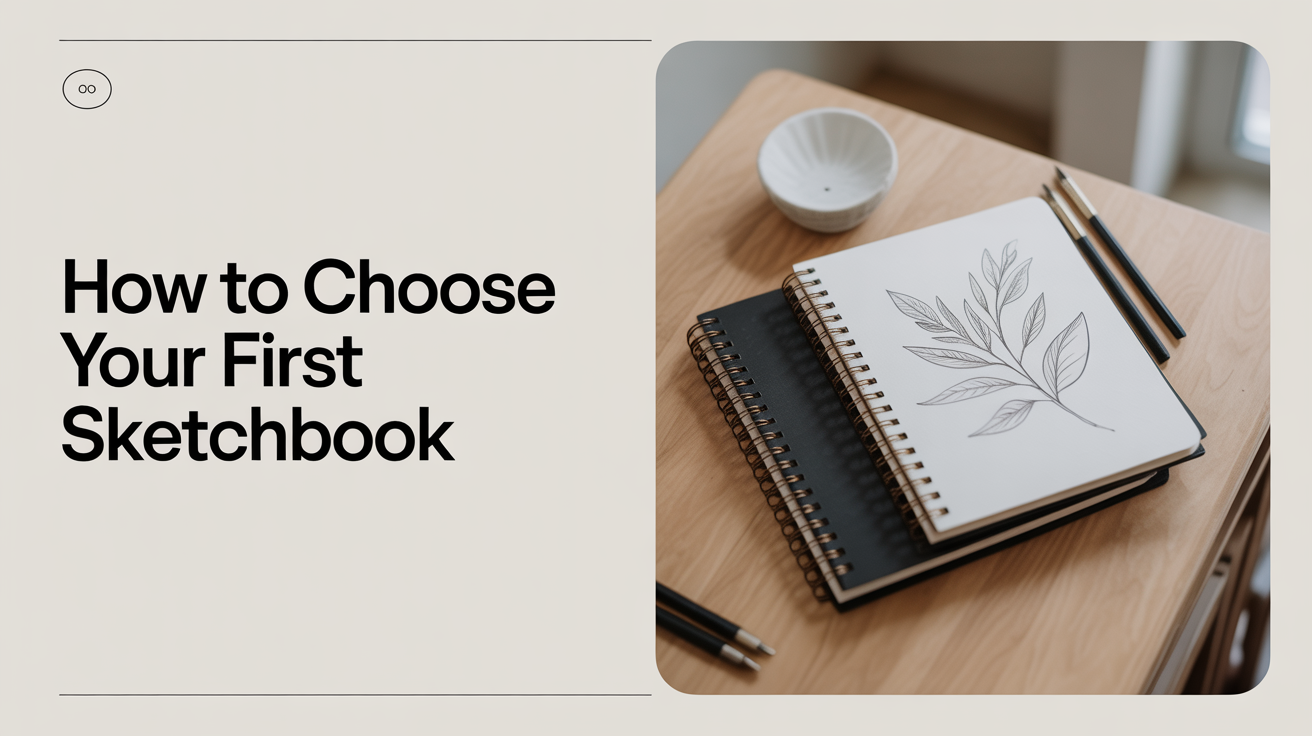
Walk into any art supply store and the sketchbook wall can stop you cold. Spiral or hardcover? 90 gsm or 140 gsm? Smooth or textured? The options multiply quickly, and without a frame of reference it's easy to grab whatever looks nice and end up with paper that fights your pencil.
This guide breaks down every decision into plain language so you can pick something that actually works, not just something that looks like it belongs on an artist's desk.
Understanding Paper Weight (gsm and lb)
Paper weight is the number you'll see most often on sketchbook packaging. It tells you how dense and thick each sheet is.
The two systems you'll encounter are gsm (grams per square meter) and lb (pounds). Both measure the same thing in different units. A rough conversion: 90 gsm is close to 60 lb, and 160 gsm is close to 107 lb. Gsm is the cleaner number to compare, so use that as your reference if you see both.
Here's a practical comparison of common weights:
| Weight | Typical Use | Notes |
|---|---|---|
| 60-75 gsm | Printer paper range | Too thin for most dry media; ghosting through the page |
| 90-100 gsm | Everyday sketching | Good for graphite and light line work; slight bleed with wet media |
| 120-130 gsm | All-purpose drawing | Handles graphite, charcoal, light watercolor washes |
| 160-200 gsm | Mixed media / watercolor | Resists warping; can handle wet and dry tools together |
For a first sketchbook focused on pencil and graphite work, 90 to 120 gsm is a reliable starting range. It's heavy enough to erase without tearing, light enough that the book doesn't feel unwieldy.
Paper Texture: Smooth, Vellum, and Rough
Texture (sometimes called "tooth") refers to how much surface grain the paper has. This affects how your pencil deposits graphite.
Smooth (hot press): Very little texture. The pencil glides, lines come out clean, and fine detail is easier to control. Good for pen and ink or technical drawings. Blending graphite can feel slippery.
Vellum (cold press or medium tooth): A light, even grain. This is the most common texture in drawing sketchbooks and works well for most pencil grades. It gives the graphite something to grab without fighting you.
Rough: Pronounced texture. Expressive marks look great, but fine detail is harder. Usually reserved for charcoal or pastel rather than pencil.
For beginners doing pencil work, vellum or medium tooth is the practical default. You can layer tones, blend with a finger or stomp, and erase cleanly. If you plan to explore graphite vs charcoal at some point, a medium-tooth paper handles both reasonably well.
Size and Binding
Size
Sketchbooks come in sizes from tiny pocket notebooks up to large studio pads. A few guidelines:
- A5 (5.8 x 8.3 in): Easy to carry, fits in a bag, good for quick studies on the go. The smaller page can feel limiting when you want to develop a drawing with more complexity.
- A4 (8.3 x 11.7 in) / 9x12 in: The most useful starting size. Big enough to work out proportions and try different compositions, small enough to sit comfortably on a desk or lap.
- A3 (11.7 x 16.5 in) / 11x14 in: Better for longer sessions at a desk. Can feel intimidating to fill when you're just starting out.
If you're unsure, start with A4 or 9x12. It gives you room to practice without the pressure of a very large page.
Binding Type
Spiral bound: The wire coil lets the book lie completely flat or fold back on itself. Useful when you're drawing outdoors or holding the book in one hand. The pages tear out cleanly along a perforation.
Perfect bound (glued spine): Looks like a traditional book. Pages don't lie quite as flat near the center. Better for keeping finished work together since pages aren't perforated.
Hardcover sewn: More durable, holds up to daily use, and usually lies reasonably flat. The cover doubles as a backing surface when you're drawing away from a table.
Pad (top-stapled): Sheets tear off individually. Good for work you want to pin up or share, less good if you want a record of your progress over time.
Spiral bound books are a common first choice because the flat opening makes it easier to draw edge-to-edge without the paper buckling toward the spine.
What to Ignore (For Now)
A few features sound important but matter less at the start:
Acid-free and archival paper is worth caring about once you're making work you want to keep for decades. For practice drawings, standard drawing paper is fine.
Toned paper (grey, tan, or black pages) changes how you approach value. It's a useful experiment eventually, but a white-page sketchbook is the better starting point because it matches what most drawing basics tutorials assume.
Fancy covers and branding tell you nothing about the paper inside. Two sketchbooks at the same price point can have noticeably different paper quality. If possible, open the book in the store and drag your finger across the page to feel the tooth before buying.
A Simple Starting Recommendation
You don't need to optimize your first sketchbook. You need something you'll actually open.
A reasonable starting setup:
- Pick a size of 9x12 in (or A4) so you have room to work.
- Look for paper in the 90 to 120 gsm range.
- Choose medium tooth (vellum surface) unless you know you're working primarily in pen.
- Spiral or hardcover binding, whichever appeals to you.
Once you've worked through a full sketchbook, you'll have a much clearer sense of what the paper did and didn't give you. That's when it's worth spending a little more on a second book based on what you actually noticed. Learning which pencil grades to use alongside your paper choice will help you get the most out of whatever sketchbook you land on.
Frequently Asked Questions
Can I just use a regular spiral notebook?
You can sketch in anything, and a regular notebook is better than not sketching. The issue is that standard notebook paper (usually 60-75 gsm) is thin enough to show graphite through to the next page and tears easily when you erase firmly. A dedicated drawing sketchbook with heavier paper makes the process less frustrating once you're past the very first sessions.
What's a good weight for watercolor washes alongside pencil?
If you want to add light watercolor or ink washes to pencil drawings, go with at least 140 gsm. Below that, the page will warp and buckle when it gets wet, making it harder to finish the drawing.
How many pages should a first sketchbook have?
Anywhere from 50 to 100 pages is a comfortable range. Enough pages that you don't feel pressure to make every drawing count, but not so many that completing the book feels like an endurance test. Filling a whole sketchbook, even a small one, is a real milestone worth working toward.
Does the brand name matter?
Not as much as the paper specs. Several mid-range brands make consistent 90-120 gsm drawing pads that perform well for beginners. Look at the gsm number and the surface description rather than the logo on the cover.
Is there a wrong sketchbook to buy?
Very thin paper (under 75 gsm) is the one type worth avoiding for pencil work. Anything above that threshold will get you started. The "best sketchbook for beginners" is honestly the one that's open on your desk.