Getting Started
How Long Does It Take to Get Good at Drawing?
Honest timelines for learning to draw, from shaky first lines to confident sketches. Discover what affects your progress and how to practice smarter.
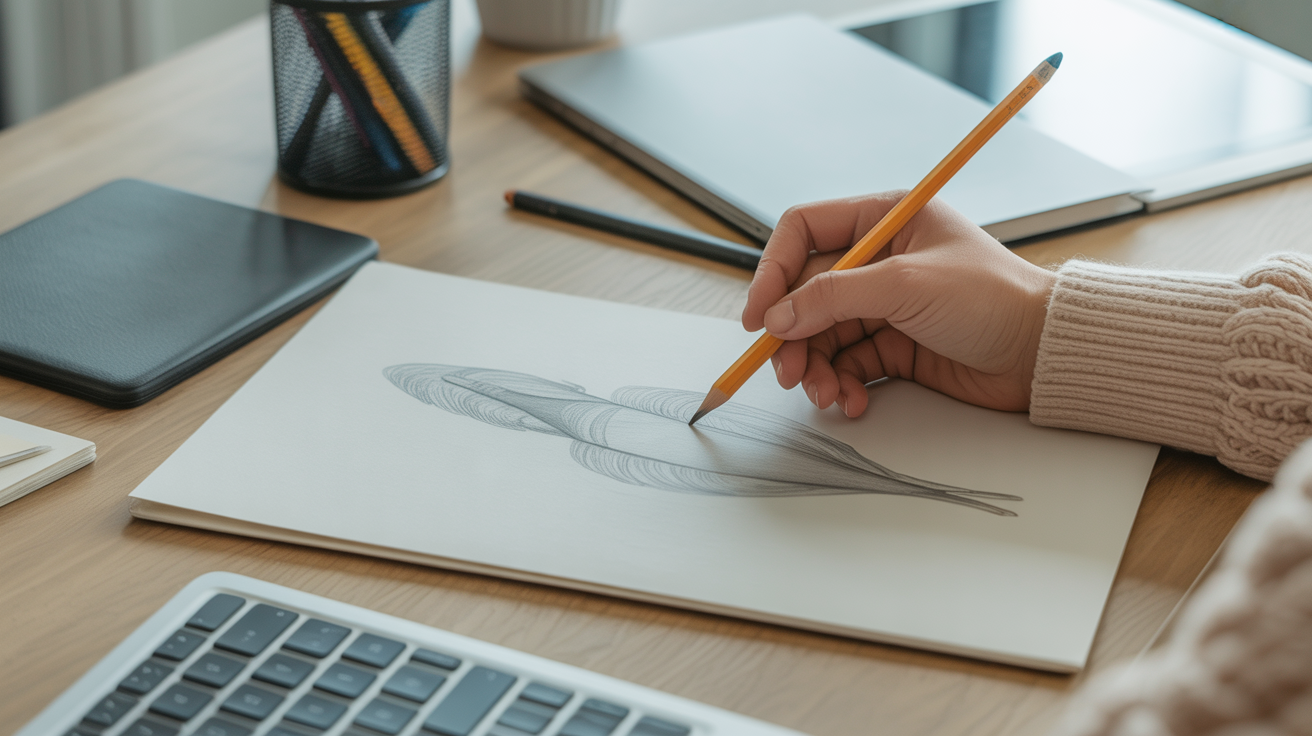
Most beginners ask this question within the first week. You pick up a pencil, try to draw something simple, and the result looks nothing like what you pictured. So you want to know: is this going to take months, or years?
The honest answer is that it depends on a few specific things, none of which are talent. Understanding those things will help you set realistic expectations and practice in a way that actually moves you forward.
What "Getting Good" Actually Means
Before we talk timelines, it helps to define the target. "Good at drawing" means different things to different people:
- Being able to draw recognizable objects from observation
- Filling a sketchbook with drawings you feel okay sharing
- Reaching a level where you can draw portraits or figures with confidence
- Drawing professionally or at a portfolio level
The first two goals are achievable for most people within a few months of consistent practice. The latter two take longer, often a year or more of focused work. This guide focuses on realistic progress for beginners, not professional-track timelines.
The Rough Drawing Progress Timeline
Progress is not linear, and your pace will be different from someone else's. That said, here is what many beginners experience when they practice regularly (around three to five sessions per week, each roughly 30 to 60 minutes):
| Timeframe | What Most Beginners Can Expect |
|---|---|
| 1 to 4 weeks | Lines feel less wobbly, basic shapes become more controlled, you develop a feel for pencil pressure |
| 1 to 3 months | You can draw simple objects from observation, shading starts to make sense, you're building visual vocabulary |
| 3 to 6 months | Proportions improve noticeably, you can tackle more complex subjects, your line confidence increases |
| 6 to 12 months | Drawings feel intentional rather than accidental, you can handle subjects like faces or hands with practice |
| 1 to 3 years | You have a recognizable style, can work from imagination more freely, handle advanced subjects consistently |
These are ranges, not guarantees. Someone who practices daily and studies deliberately may hit each milestone faster. Someone who practices sporadically will see slower movement, but they will still improve.
What Speeds Up (or Slows Down) Your Progress
Effort matters more than raw time. Thirty focused minutes drawing from observation will do more for you than two hours of doodling the same thing you always doodle. Here are the factors that have the biggest impact:
Observation practice. Drawing from life or photo reference trains your eye to see accurately. This is the skill that underpins almost everything else. If you skip it and only draw from memory or imagination early on, progress tends to be slower. Learning to see is covered in detail in Learning to See: The Skill Behind Every Drawing.
Consistency over intensity. Drawing four times a week for thirty minutes beats one long session on Sunday. Frequency builds muscle memory and keeps your eye calibrated.
Getting feedback. This can mean comparing your drawing to the reference you used, studying where proportions went off, or sharing work in beginner communities where you get honest input. The goal is to identify specific things to fix, not just admire or criticize the whole drawing.
Studying fundamentals deliberately. Line control, basic shapes, shading, proportion, and perspective are all learnable skills. Working through them one at a time is more efficient than trying to draw ambitious subjects before the foundations are in place.
Starting correctly. Small habits like how you hold the pencil affect your control from session one. Drawing with your wrist locked tends to produce tense, short marks. How to Hold a Pencil for Drawing (Not Like Writing) walks through the basics.
Why Early Drawings Look Bad (and Why That's Fine)
Your early drawings will probably not look the way you expect. This is normal and not a sign that you lack ability.
The gap between what you see and what your hand produces takes time to close. Your eye is already trained from a lifetime of looking at things. Your hand is not yet trained to translate that into marks on paper. The mismatch is frustrating precisely because your taste is already ahead of your skill, which means you can tell something is wrong before you know how to fix it.
The way through is to keep going. Shaky lines, flat shapes, and off proportions are not failures. They are data. Each drawing tells you something specific to work on next.
If you want a structured starting point for the earliest stage, How to Start Drawing as a Complete Beginner covers a simple sequence that avoids the overwhelm of trying to learn everything at once.
How to Practice So You Actually Improve
Putting in hours matters less than putting in the right hours. Here is a simple practice structure that works for beginners:
- Warm up with lines and shapes. Spend five minutes drawing straight lines, ellipses, and boxes. This gets your hand loose and focused before you tackle a subject.
- Draw from a reference. Pick one thing: a mug, a hand, a simple plant. Look more than you draw. Try to capture basic proportions before adding detail.
- Do a quick comparison. Hold your drawing up next to the reference. What is most different? Note one specific thing to watch on the next drawing.
- End with something low-stakes. Sketch something freely for five minutes without worrying about the result. This keeps drawing enjoyable.
You do not need a full curriculum or expensive course to make progress this way. Consistent observation practice and honest self-review go a long way.
Frequently Asked Questions
Can I learn to draw on my own, or do I need classes?
Many people improve significantly through self-study. Classes or structured courses can accelerate progress because they give you feedback and a clear sequence, but they are not required. The most important thing is regular practice from observation combined with some attention to fundamentals like proportion and shading.
Does natural talent play a role?
Some people pick up basic hand-eye coordination faster than others, but the gap closes with practice. Drawing is largely a learned skill, not an innate one. Most people who seem naturally good at drawing started early and practiced a lot, even if they do not frame it that way.
What if I've been drawing for months and feel stuck?
Plateaus are common. When you stop noticing improvement, it often means you have gotten comfortable with what you are already drawing. Try a subject that challenges you, draw from a type of reference you usually avoid, or focus on one specific skill (like shading or perspective) for a few weeks. Discomfort is usually a sign you are working on the right thing.
How many hours does it take to get good at drawing?
You will see estimates ranging from a few hundred to several thousand hours depending on the target skill level. Rather than fixating on a number, focus on the quality of each session. Engaged practice over scattered repetition is what matters most.
Should I draw every day?
Daily drawing builds habits and keeps your eye sharp, but rest days are fine. The goal is consistent practice over weeks and months, not perfection in any given week. Missing a day or two is not going to derail your progress as long as you come back to it.